Yard Drainage Problems in Montrose CO How to Fix Pooling Water Muddy Spots and Washouts
If your yard turns into a sponge every time snow melts or you get a solid rain, you are not being dramatic. Drainage problems are one of those things that start as an annoyance and slowly turn into bigger issues. Mud you track into the house. Grass that never fills in. Plants that rot. Gravel that migrates. A corner of the yard that always smells damp.
In Montrose, I see this a lot. The good news is most drainage problems are fixable. The even better news is you do not always need a huge expensive solution. You just need the right diagnosis, because the wrong fix can make it worse or push the water problem to a different spot.
If you want help figuring out what is happening in your yard, you can start here:
A Plus Landscaping Services
A Plus Landscaping Work
Contact A Plus Landscaping
Start here What type of drainage problem do you actually have
Drainage issues usually fall into one of these buckets.
Standing water that sits for hours or days
This is usually poor soil drainage, compaction, or a low spot that collects water.
Muddy areas that never seem to dry out
Often a grading issue, constant runoff path, or downspout dumping water in the wrong place.
Erosion and washouts on a slope
This is runoff moving too fast and taking soil with it.
Water collecting near the house
This one matters most. Water near the foundation is not just a lawn problem, it is a home protection problem.
The City of Montrose has a stormwater program focused on protecting local surface waters and managing stormwater impacts, which is a good reminder that moving water correctly matters for the whole area, not just one yard.
A quick five minute test that saves you from guessing
Go outside next time the sprinklers run or after the next wet day and look for clues.
- Where does water enter the yard
Downspouts, driveway runoff, neighbors, sprinkler overspray - Where does it want to go
Look for natural channels, low spots, and the path of least resistance - Where does it stop
That is usually your problem area - What does the soil feel like
If the soil stays slick and tight, infiltration is likely poor
Colorado State University Extension explains that soil drainage affects root growth and water movement and that improving soil structure and tilth can help water move and plants thrive.
The most common causes of yard drainage problems in Montrose
1 Low spots and poor grading
Sometimes the yard simply slopes the wrong way, or it settled over time.
A practical rule used in many guidance documents is that the ground should slope away from the foundation so water does not pond next to the house. The Colorado Geological Survey includes clear discussion and visuals on how poor lot grading can lead to ponding around foundations and provides slope guidance near homes.
2 Downspouts dumping water too close to the house
This is a big one because it creates a constant wet zone.
The Building America Solution Center includes guidance on gutters and downspouts and notes important considerations for moving water away from the home and not soaking the foundation area.
3 Compacted soil that cannot absorb water
If your soil is hard, water runs off. If water runs off, it pools somewhere else.
Colorado Master Gardener guidance notes that routine core aeration can help open compacted soils to air and water, improving infiltration.
4 Thatch and tired turf in the problem zone
A heavy thatch layer can slow infiltration and keep the surface wet longer, which makes grass weaker over time.
5 Irrigation running too long too fast
If water is applied faster than the soil can take it in, runoff happens even when it is not raining.
Colorado Springs Utilities describes the cycle and soak approach, which breaks watering into shorter cycles so water can soak in instead of running off.
Drainage solutions that actually work and when to use them
Option 1 Minor regrading to remove the low spot
Best for
Small pooling areas, birdbath spots, muddy corners
What it looks like
We add or shift soil to create a gentle slope so water does not stop in the same place. Then we restore the surface with seed, sod, or a bed design depending on the location.
This is often the simplest long term fix.
Option 2 Redirecting downspouts and roof runoff
Best for
Wet zones near the house, soggy strips along the foundation, basement dampness signs
What it looks like
We move discharge farther away or route it into a safe area that can handle it, without creating a new problem for the neighbor.
This is one of those fixes that can change the entire yard fast.
Option 3 Improving soil infiltration in the problem area
Best for
Clayey compacted zones, lawns that stay slick, areas where water just sits on top
What it looks like
Core aeration, soil amendment where appropriate, then repairing turf or converting the zone to a planting bed that can handle moisture better.
CSU soil drainage guidance focuses on how drainage impacts plant growth and discusses ways to identify and manage poor drainage.
Option 4 A dry creek bed or swale to guide water
Best for
Sloped yards, seasonal runoff paths, snowmelt flow lines
What it looks like
A shallow rock lined channel that looks intentional and gives water a place to go. This can reduce erosion and keep water from cutting random grooves through the lawn.
Option 5 A rain garden or planted drainage zone
Best for
Runoff you want to slow and soak in, areas that can be designed as a feature
Water Education Colorado describes rain gardens as a tool that can help with stormwater runoff while using plants and root systems to support infiltration and filtering.
This option works best when it is designed correctly for the volume of water and planted with appropriate species.
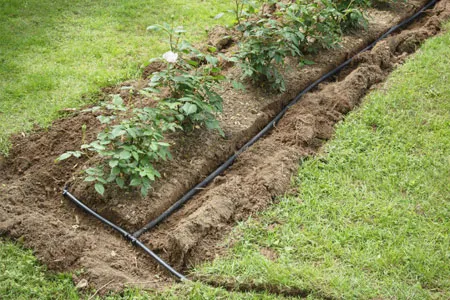
Option 6 Drainage pipe solutions when needed
Best for
Severe standing water, persistent saturation, places where surface fixes cannot move enough water
This is where professional design matters most because you want the water directed safely and you do not want to accidentally create a bigger issue somewhere else.
What not to do if you want the problem to stop coming back
Do not just throw seed on mud
If the area stays wet, grass roots cannot breathe and seed will keep failing.
Do not raise the spot with random gravel and hope
It often creates a mess and can trap water in odd ways.
Do not point runoff toward a neighbor
Fixing your yard by flooding someone else is the fastest way to create a real conflict.
Do not ignore water near the foundation
This is the one that can become a bigger problem than landscaping.
How drainage ties into water wise landscaping in Montrose
A water wise yard is not only about using less water. It is also about putting water where it makes sense and preventing waste through runoff.
Colorado Water Wise highlights outdoor water use best practices that connect landscape design, installation, and maintenance with water efficiency.
Even simple improvements like cycle and soak irrigation and better bed layout can reduce runoff and keep water in the right place.
Signs you should call a pro for drainage
- Water is collecting near the house
- The same area stays muddy even in dry weather
- You have erosion lines forming after storms
- Grass keeps dying in the same spot no matter what you do
- You see water running off the property during irrigation
Drainage is one of those things where a quick site visit can prevent months of wasted effort.
FAQ Yard drainage in Montrose
If water sits for more than a few hours after normal watering or a typical rain, you likely have a grading or infiltration issue worth addressing.
Aeration can help when compaction is the main issue, especially in lawn areas, but it will not fix a low spot that needs grading or runoff that is being dumped into one area.
It can be decorative, but it is also functional when it is designed to guide water along a controlled path.
Often it is correcting downspout discharge and adjusting irrigation scheduling so runoff stops.
Want help fixing it the right way the first time
If you want us to take a look, explain what is causing the drainage problem, and recommend the simplest fix that will hold up, reach out here:
A Plus Landscaping Services
A Plus Landscaping Work
Contact A Plus Landscaping
Share it :

Evan
Popular Post
Signup our newsletter to get update information, news, insight or promotions.
Latest Post
February 13, 2026
January 31, 2026
January 29, 2026